
Packing and Storage Supplies 101: Everything You Need To Store Your Belongings
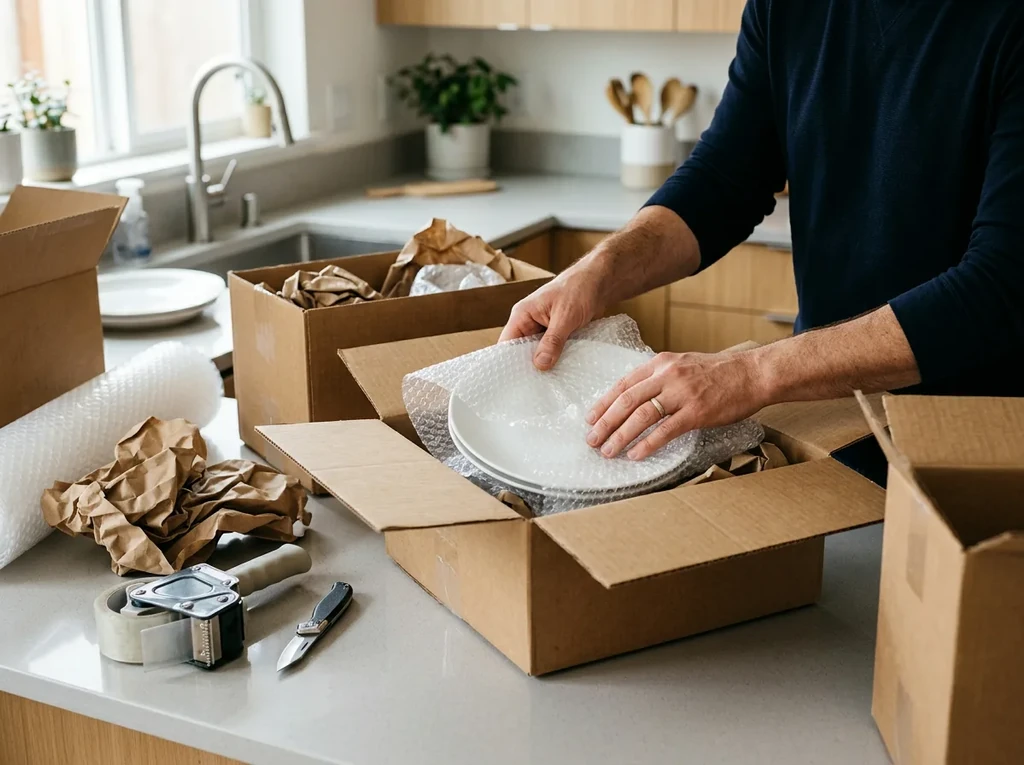
You clear the first closet shelf, reach for a box, and realize you don't have the right size, enough tape, or anything to wrap the fragile pieces. Finding the right packing supplies is one of the most overlooked steps of any move or storage project, and gathering them late costs time and money in extra store runs and broken items. Let Castle Self Storage help you with the essentials, including choosing the right box sizes, using Bubble Wrap effectively, storing clothes long term, and selecting the dish packing supplies you need. With these decisions made up front, the rest of your move goes much faster.
Choosing the Right Moving Box Sizes
Box size is one of those things that sounds obvious until you pack a large box with books and cannot lift it off the floor. The general rule is for heavy items to go in small boxes, while light items go in large ones.
Small boxes (roughly 1.5 cubic feet) are best for books, canned goods, tools, and anything else with real weight. Medium boxes (around 3 cubic feet) handle kitchen appliances, toys, and folded clothing well. Large boxes (4 to 5 cubic feet) are for pillows, comforters, lampshades, and other lightweight bulky items that would otherwise take up awkward space. Wardrobe boxes are worth buying if you have a full closet to move, since hanging clothes go in directly and arrive with fewer wrinkles.
One practical tip: buy more boxes than you think you need. A mid-pack supply run can add hours to the process, and any extras come in handy later for organizing your storage unit or rotating seasonal items.
How To Use Bubble Wrap for Moving
Using bubble wrap for moving works best when the bubbles face inward against the item. With the bubbles facing out, the flat plastic sheet is what touches the glass, and the cushioning drops considerably.
For anything breakable, wrap each piece individually, secure it with tape, and then nest it in crumpled packing paper inside the box. Bubble Wrap handles the impact; packing paper fills the dead space so items cannot shift. A box that rattles when you shake it is a box that will likely arrive with broken contents.
Furniture corners, picture frames, and mirrors also benefit from Bubble Wrap. For large flat items, a combination of corner protectors and a full wrap reduces the risk of edge damage during loading and unloading. If you want to cut costs, packing paper and newsprint can substitute for Bubble Wrap on less fragile items, though newsprint ink can transfer to light-colored surfaces.
Dish Packing Supplies: What You Actually Need
Dishes are one of the most common sources of breakage during a move, and the fix is to use the right dish packing supplies and a bit of patience. You need cell divider kits (the cardboard inserts that create individual compartments inside a box), plenty of packing paper, and ideally dish pack boxes, which have double-thick walls. You can find most of what you need through the packing and storage supplies Castle Self Storage stocks on-site.
Pack plates vertically, not flat. Stacked flat plates put all the weight on the bottom ones, and any shift during transport sends cracks through the stack. Vertical packing distributes the load across the edges, which are structurally stronger. Wrap each plate individually in packing paper, then slide it into a cell. Bowls nest well when each one is wrapped and placed rim-down.
Stuff a little packing paper inside each glass and mug before wrapping it, and give mug handles an extra layer so they don't snap off. Fill every gap in the box with crumpled paper before closing it. If the box flexes when you press the top, it needs more filler.
How To Store Clothes Long Term
Clothing that goes into storage clean, folded the right way, and packed in breathable containers tends to come out in much better shape. Most problems trace back to a few avoidable habits involving sealed plastic, stretched hangers, and stains left untreated.
Avoid plastic bags for long-term clothing storage. Sealed plastic keeps fabric from breathing and can cause yellowing over time. Instead, use breathable fabric storage bags or lidded bins with cedar blocks inside. Cedar naturally deters moths without the chemical residue that mothballs leave behind, which can be difficult to remove from fabric.
For items you want to keep in good condition, like wool coats, formal wear, or special-occasion outfits, clean everything before storing it. Stains and body oils become harder to remove the longer they sit. Fold knits rather than hanging them, since the weight of a heavy sweater on a hanger will stretch the shoulders out of shape over time. Hang structured items like blazers and dresses on padded hangers inside a wardrobe box or a breathable garment bag.
Natural fibers like wool and silk respond to the temperature swings of a New England winter and summer, so delicate fabrics rank high among the items that need climate-controlled storage during an extended stay. A climate-controlled storage unit keeps them within a steadier temperature range than a garage or attic.
Other Packing Supplies Worth Having on Hand
Beyond boxes, a few other packing supplies make a noticeable difference. Stretch wrap (the clear plastic film on a roll) is useful for bundling furniture legs together, keeping drawers from sliding open, and shielding upholstered surfaces from dust and scuffs. It is not a substitute for padding, but it keeps things tidy and contained.
Furniture pads or moving blankets shield wood surfaces and upholstery during transport and while items sit in storage. A few blankets cover most household moves, and you can reuse them to drape furniture once it is in the storage unit. Mattress bags are another underrated item, since a mattress left unwrapped during a move or a long stay in storage can collect dust over time.
Labeling supplies matter more than most people realize. Use a thick permanent marker and label every box on the side, not just the top, so you can read it when boxes are stacked. Color-coded labels by room save time when you are unloading. A simple inventory list, even a handwritten one, helps you find things months later without pulling every box off the shelf.
Matching Your Supplies to the Right Storage Unit
Even the best packing job benefits from the right storage unit. Before you buy supplies, think about what you are storing and for how long. The amount of space you need shapes how you pack and stack, and a quick look at our storage unit sizes helps you estimate it before you reserve. An overpacked storage unit puts pressure on boxes at the bottom and makes it harder to reach items without unpacking everything.
Size is only one part of the decision. Climate control availability and convenience both factor into choosing the right self storage unit, and with five storage locations across Massachusetts, Castle Self Storage makes it possible to compare options close to home.
Contact us online or call your nearest Castle Self Storage location today to rent a storage unit and pick up your packing supplies in the same trip.